
cenovus energy
Cenovus Energy Inc. is a Canadian integrated oil and natural gas company headquartered in Calgary, Alberta. Its offices are located at Brookfield Place, having completed a move from the neighbouring Bow in 2019.
Read More
Close
New technology has increased oil production from North American shale rock formations. Even so, oil prices have held up due to the improving global economy and lower output from conventional wells.
However, the outlook for oil remains uncertain. The lifting of economic sanctions against Iran would increase world oil supplies and hurt prices....
However, the outlook for oil remains uncertain. The lifting of economic sanctions against Iran would increase world oil supplies and hurt prices....
CENOVUS ENERGY INC. $28 (New York symbol CVE; Conservative Growth Portfolio, Resources sector; Shares outstanding: 755.8 million; Market cap: $21.2 billion; Priceto- sales ratio: 1.2; Dividend yield: 3.2%; TSINetwork Rating: Average; www.cenovus.com) gets 60% of its production from its three heavy oil projects in Alberta and one in Saskatchewan. Conventional oil and natural gas wells supply the remaining 40%.
U.S.-based ConocoPhillips (New York symbol COP) owns 50% of Cenovus’s main Foster Creek and Christina Lake oil sands projects in Alberta. Cenovus ships the bitumen from these fields to its 50%-owned refineries in Illinois and Texas. Phillips 66 (New York symbol PSX) owns the other 50% of these refineries.
The company expects lower cash flow in 2014, partly due to rising operating costs at its oil sands projects. It’s now working on making these operations more efficient.
...
U.S.-based ConocoPhillips (New York symbol COP) owns 50% of Cenovus’s main Foster Creek and Christina Lake oil sands projects in Alberta. Cenovus ships the bitumen from these fields to its 50%-owned refineries in Illinois and Texas. Phillips 66 (New York symbol PSX) owns the other 50% of these refineries.
The company expects lower cash flow in 2014, partly due to rising operating costs at its oil sands projects. It’s now working on making these operations more efficient.
...
FORTIS INC., $30.12, Toronto symbol FTS, fell 4% this week after it agreed to buy UNS Energy Corp. (New York symbol UNS), which distributes electricity and natural gas to 654,000 clients in Arizona. UNS also operates power plants with a total capacity of 2,420 megawatts. These facilities get their power from coal (59%), natural gas (34%), solar (1%) and other fuels (6%). Fortis will pay $4.3 billion U.S., which includes assuming $1.8 billion U.S. of UNS’s debt. This is a big purchase for Fortis, which has a $6.4-billion (Canadian) market cap (or the value of all its outstanding shares). The company aims to complete the deal by the end of 2014. After the purchase, Fortis will pay an additional $200 million U.S. to help UNS fund its planned purchases of two gas-fired plants. That will lower its reliance on coal....


Exchange traded funds (ETFs) are set up to mirror the performance of a stock-market index or subindex. They hold a more or less fixed selection of securities that represent the holdings that go into the calculation of the index or sub-index.
ETFs trade on stock exchanges, just like stocks....
ETFs trade on stock exchanges, just like stocks....
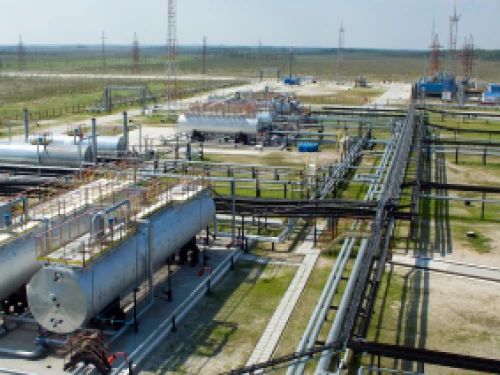
Oil prices have soared from around $18 U.S. a barrel in 1993 to around $97 U.S. today. However, new drilling technologies have made it easier to extract oil from hard-to-reach deposits, such as oil sands and shale rock formations. Rising production from these sources could hurt oil prices in the same way the shale gas boom has depressed natural gas prices....

CENOVUS ENERGY INC. $30 (Toronto symbol CVE; Conservative Growth Portfolio, Resources sector; Shares outstanding: 755.7 million; Market cap: $22.7 billion; Price-to-sales ratio: 1.3; Dividend yield: 3.2%; TSINetwork Rating: Average; www.cenovus.com) gets 60% of its production from its three heavy oil projects in Alberta and one in Saskatchewan. Conventional oil and natural gas wells supply the remaining 40%. In all, Cenovus’s proved reserves should last at least 23 years.
U.S.-based ConocoPhillips (New York symbol COP) owns 50% of Cenovus’s main Foster Creek and Christina Lake oil sands projects in Alberta. These operations produce heavy bitumen, which Cenovus ships to its 50%-owned refineries in Illinois and Texas. Phillips 66 (New York symbol PSX) owns the other 50% of these refineries.
In the three months ended September 30, 2013, Cenovus produced 264,100 barrels of oil equivalent a day (67% oil and 33% gas), down 1.3% from 267,500 barrels a year earlier.
...
U.S.-based ConocoPhillips (New York symbol COP) owns 50% of Cenovus’s main Foster Creek and Christina Lake oil sands projects in Alberta. These operations produce heavy bitumen, which Cenovus ships to its 50%-owned refineries in Illinois and Texas. Phillips 66 (New York symbol PSX) owns the other 50% of these refineries.
In the three months ended September 30, 2013, Cenovus produced 264,100 barrels of oil equivalent a day (67% oil and 33% gas), down 1.3% from 267,500 barrels a year earlier.
...
Oil prices have soared from around $18 U.S. a barrel in 1993 to around $100 U.S. today. However, new drilling technologies have made it easier to extract oil from hard-to-reach deposits, such as oil sands and shale rock formations. Rising production from these sources could hurt oil prices in the same way the shale gas boom has depressed natural gas prices (see Encana on Page 111).
Even so, these three oil producers continue to expand their oil sands operations....
Even so, these three oil producers continue to expand their oil sands operations....
CENOVUS ENERGY $30.31 (Toronto symbol CVE; Shares outstanding: 755.8 million; Market cap: $23.3 billion; TSINetwork Rating: Average; Dividend yield: 3.2%; www.cenovus.com) operates three heavy oil projects in Alberta and one in Saskatchewan. It gets about half its output from the oil sands. Conventional oil and natural gas wells supply the other half. The company’s reserves should last 23 years.
In the three months ended June 30, 2013, Cenovus’s production rose 2.2%. The increase helped push up revenue to $4.5 billion from $4.2 billion. However, higher operating costs from new projects caused the company’s earnings to decline 8.1%, to $0.34 from $0.37. Cash flow per share fell 5.7%, to $1.15 from $1.22.
Cenovus’s outlook is positive, and it plans to spend $3.3 billion to $3.7 billion annually over the next 10 years to increase its production.
...
In the three months ended June 30, 2013, Cenovus’s production rose 2.2%. The increase helped push up revenue to $4.5 billion from $4.2 billion. However, higher operating costs from new projects caused the company’s earnings to decline 8.1%, to $0.34 from $0.37. Cash flow per share fell 5.7%, to $1.15 from $1.22.
Cenovus’s outlook is positive, and it plans to spend $3.3 billion to $3.7 billion annually over the next 10 years to increase its production.
...
Macro Enterprises, $6.42, symbol MCR on Toronto (Shares outstanding: 29.1 million; Market cap: $185.7 million; www.macroenterprises.ca), is a Calgary-based company that builds and maintains pipelines and other facilities. Its clients include Enbridge, Talisman, TransCanada, Cenovus, Nexen, Spectra, AltaGas and Pembina. In the three months ended June 30, 2013, Macro’s revenue rose 34.1%, to $37.3 million from $27.8 million a year earlier. Earnings per share rose sharply, to $0.21 from $0.11. The company holds cash of $9.4 million, or $0.32 a share. Its $14.2 million of debt is a low 7.6% of its $185.7-million market cap....