
canadian tire
Toronto symbol CTC.A, operates stores that sell automotive, household and sporting goods. It also operates PartSource auto parts stores, Mark’s Work Wearhouse casual clothing stores and gas stations.

Every Tuesday we bring you “Best Canadian Stocks.” You get our specific recommendations on the stocks we profile, with a full explanation of how we arrived at our opinion. You’ll read about stocks making moves you should know about, from coverage in one of our three newsletters featuring Canadian stocks—The Successful Investor, Stock Pickers Digest and Canadian Wealth Advisor.
THOMSON REUTERS CORP. (Toronto symbol TRI; www.thomsonreuters.com) is seeing higher demand for its financial information products for the first time since the 2008 economic crisis. Sales at its legal and tax and accounting businesses are also improving.
In the three months ended September 30, 2014, Thomson’s overall revenue rose 1.1%, to $3.11 billion from $3.07 billion a year earlier (all amounts except share price and market cap in U.S. dollars).
The financial division’s revenue (54% of the total) fell 0.7%. But banks and other clients are buying more products than they’re cancelling, which should raise this division’s future revenue.
Revenue rose 1.3% at the legal-products division (28%), 11.5% at tax and accounting (10%) and 3.3% at intellectual property and science (8%).
...

THOMSON REUTERS CORP. (Toronto symbol TRI; www.thomsonreuters.com) is seeing higher demand for its financial information products for the first time since the 2008 economic crisis. Sales at its legal and tax and accounting businesses are also improving.
In the three months ended September 30, 2014, Thomson’s overall revenue rose 1.1%, to $3.11 billion from $3.07 billion a year earlier (all amounts except share price and market cap in U.S. dollars).
The financial division’s revenue (54% of the total) fell 0.7%. But banks and other clients are buying more products than they’re cancelling, which should raise this division’s future revenue.
Revenue rose 1.3% at the legal-products division (28%), 11.5% at tax and accounting (10%) and 3.3% at intellectual property and science (8%).
...

Every Tuesday we bring you “Best Canadian Stocks.” You get our specific recommendations on the stocks we profile, with a full explanation of how we arrived at our opinion. You’ll read about stocks making moves you should know about, from coverage in one of our three newsletters featuring Canadian stocks—The Successful Investor, Stock Pickers Digest and Canadian Wealth Advisor.
A sinkhole recently forced Russia’s Uralkali to close its Solikamsk-2 mine, which accounts for 20% of Uralkali’s potash production and 3.5% of global capacity.
Uralkali didn’t say how long it would take to reopen the mine, but it could close it permanently.
Regardless of the length of the shutdown, high potash inventories will continue to weigh on prices. Moreover, this year’s record U.S. harvest has hurt corn, soybean and wheat prices, prompting farmers to store excess crops while they wait for a rebound.
However, we feel that steady sales from Agrium’s retail stores give it an advantage over bulk fertilizer producers like Potash Corp.
...

A sinkhole recently forced Russia’s Uralkali to close its Solikamsk-2 mine, which accounts for 20% of Uralkali’s potash production and 3.5% of global capacity.
Uralkali didn’t say how long it would take to reopen the mine, but it could close it permanently.
Regardless of the length of the shutdown, high potash inventories will continue to weigh on prices. Moreover, this year’s record U.S. harvest has hurt corn, soybean and wheat prices, prompting farmers to store excess crops while they wait for a rebound.
However, we feel that steady sales from Agrium’s retail stores give it an advantage over bulk fertilizer producers like Potash Corp.
...

Every Wednesday, we publish our “Investor Toolkit” series on TSI Network. Whether you’re a beginning or experienced investor, these weekly updates are designed to give you specific investment tips and stock market advice. Each Investor Toolkit update gives you a fundamental piece of investment advice, and shows you how you can put it into practice right away.
Today’s tip: “Bottom-up investors have the great advantage of basing their decisions on what they know about stocks, rather than trying to guess how stocks might be affected by a random series of events.”
In the early chapters of any good book on fundamental stock market advice, you will come across the two basic ways to make investment decisions: bottom-up and top-down....

Today’s tip: “Bottom-up investors have the great advantage of basing their decisions on what they know about stocks, rather than trying to guess how stocks might be affected by a random series of events.”
In the early chapters of any good book on fundamental stock market advice, you will come across the two basic ways to make investment decisions: bottom-up and top-down....

Every Tuesday we bring you “Best Canadian Stocks.” You get our specific recommendation on the stocks we profile, with a full explanation of how we arrived at our opinion. You’ll read about stocks making moves you should know about, from coverage in one of our three newsletters featuring Canadian stocks—The Successful Investor, Stock Pickers Digest and Canadian Wealth Advisor.
CANADIAN TIRE CORP. (Toronto symbol CTC.A; www.canadiantire.ca)operates 492 Canadian Tire stores, which specialize in automotive, household and sporting goods. It also owns other retail chains, such as Mark’s (casual clothing) and SportChek.
The company continues to add new locations and renovate older stores. It’s also benefiting from its 2011 purchase of the Forzani Group of sporting goods stores, including the popular SportChek banner. These moves are helping it compete with U.S.-based retailers like Wal-Mart.
Earlier this year Canadian Tire agreed to sell 20% of its credit card operations to Bank of Nova Scotia for $500 million. The company has an option to sell an additional 29% to the bank over the next 10 years.
...

CANADIAN TIRE CORP. (Toronto symbol CTC.A; www.canadiantire.ca)operates 492 Canadian Tire stores, which specialize in automotive, household and sporting goods. It also owns other retail chains, such as Mark’s (casual clothing) and SportChek.
The company continues to add new locations and renovate older stores. It’s also benefiting from its 2011 purchase of the Forzani Group of sporting goods stores, including the popular SportChek banner. These moves are helping it compete with U.S.-based retailers like Wal-Mart.
Earlier this year Canadian Tire agreed to sell 20% of its credit card operations to Bank of Nova Scotia for $500 million. The company has an option to sell an additional 29% to the bank over the next 10 years.
Right now, lots of long-time holders of Canadian Pacific and Canadian Tire are developing what’s known as an “itchy trigger finger”. They are thinking of selling these two long-time mainstays of the Canadian stock market simply because they have been particularly strong performers in the past few years.
This impulse rarely pays off.
When you follow the stock market for a few years, it’s easy to assume a certain consistency that just isn’t there. You may get the idea that a particular stock is a slow-moving dog that will stagnate forever, or that another is a sure-fire growth stock that has decades of growth ahead.
If these stocks depart from the category you have assigned them to, it’s natural to assume the changes are temporary and things will eventually “go back to normal”. So, for instance, if a long-time income stock you own suddenly begins moving up and doubles in price over, say, three years, you may decide to sell all or part of it now, in hopes of buying it back “on a dip”, as investors say. Or, you may want to go on to something new that has not yet had a substantial rise.
The problem is that you are basing a sale decision mainly on a change in the price. But the price change almost certainly reflects other, more fundamental factors. If you only look at the price, you ignore the fundamentals.
...
This impulse rarely pays off.
When you follow the stock market for a few years, it’s easy to assume a certain consistency that just isn’t there. You may get the idea that a particular stock is a slow-moving dog that will stagnate forever, or that another is a sure-fire growth stock that has decades of growth ahead.
If these stocks depart from the category you have assigned them to, it’s natural to assume the changes are temporary and things will eventually “go back to normal”. So, for instance, if a long-time income stock you own suddenly begins moving up and doubles in price over, say, three years, you may decide to sell all or part of it now, in hopes of buying it back “on a dip”, as investors say. Or, you may want to go on to something new that has not yet had a substantial rise.
The problem is that you are basing a sale decision mainly on a change in the price. But the price change almost certainly reflects other, more fundamental factors. If you only look at the price, you ignore the fundamentals.
...

Every Tuesday we bring you “Best Canadian Stocks.” You get our specific recommendation on the stocks we profile, with a full explanation of how we arrived at our opinion. You’ll read about stocks making moves you should know about, from coverage in one of our three newsletters featuring Canadian stocks—The Successful Investor, Stock Pickers Digest and Canadian Wealth Advisor.
Maple Leaf Foods is nearing the end of its multi-year plan to unload less profitable businesses and modernize its meat-processing plants. The plan’s costs have depressed the company’s current earnings, but it greatly improves its longer-term prospects.
MAPLE LEAF FOODS INC. (Toronto symbol MFI; www.mapleleaf.ca) is Canada’s largest foodprocessing company. It mainly sells its products, including fresh and prepared meats and poultry, under the Maple Leaf and Schneider brands.
In May 2014, the company sold its 90.0% stake in Canada Bread, Canada’s second-largest producer of baked goods after Weston Bakery. It received $1.66 billion for this holding.
Meanwhile, Maple Leaf continues to make progress with a major restructuring of its meat-processing operations, which mainly involves closing older plants and shifting their operations to newer facilities. The company expects to complete the plan by the end of 2015.
...

Maple Leaf Foods is nearing the end of its multi-year plan to unload less profitable businesses and modernize its meat-processing plants. The plan’s costs have depressed the company’s current earnings, but it greatly improves its longer-term prospects.
MAPLE LEAF FOODS INC. (Toronto symbol MFI; www.mapleleaf.ca) is Canada’s largest foodprocessing company. It mainly sells its products, including fresh and prepared meats and poultry, under the Maple Leaf and Schneider brands.
In May 2014, the company sold its 90.0% stake in Canada Bread, Canada’s second-largest producer of baked goods after Weston Bakery. It received $1.66 billion for this holding.
Meanwhile, Maple Leaf continues to make progress with a major restructuring of its meat-processing operations, which mainly involves closing older plants and shifting their operations to newer facilities. The company expects to complete the plan by the end of 2015.
...
CANADIAN TIRE CORP. $126 (Toronto symbol CTC.A; Conservative Growth Portfolio, Consumer sector; Shares outstanding: 78.1 million; Market cap: $9.8 billion; Price-to-sales ratio: 0.8; Dividend yield: 1.7%; TSINetwork Rating: Above Average; www.canadiantire.ca) continues to add new locations and renovate older stores. It’s also benefiting from its 2011 purchase of the Forzani Group of sporting goods stores, including the popular Sport Chek banner. These moves are helping it compete with U.S.-based retailers like Wal-Mart. In the quarter ended September 27, 2014, Canadian Tire’s earnings rose 18.4%, to $172.2 million from $145.5 million a year earlier. Earnings per share gained 21.2%, to $2.17 from $1.79, on fewer shares outstanding. Overall sales rose 3.9%, to $3.1 billion from $3.0 billion. Same-store sales at the 493 Canadian Tire outlets gained 3.2% on strong demand for summer goods, like garden tools and patio furniture, and automotive products and services....
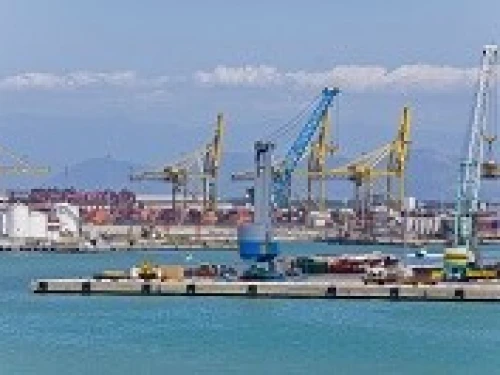
Every Monday we feature “A Stock to Sell” as our daily post. With every stock we recommend as a sell, we give you a full explanation of why we advise against investing in the stock at this time. Westshore Terminals Investment Corp. (symbol WTE on Toronto; www.westshore.com) owns a coal storage and loading terminal at Roberts Bank, B.C., about 30 kilometres south of Vancouver. The terminal started up in 1970....

We still think investors will profit most—and with the least risk—by buying shares of well-established, dividend-paying stocks with strong business prospects.
These are companies that have strong positions in healthy industries. They also have strong management that will make the right moves to remain competitive in a changing marketplace.
Stocks like these give investors an additional measure of safety in today’s volatile markets. And the best ones offer an attractive combination of moderate p/e’s (the ratio of a stock’s price to its per-share earnings), steady or rising dividend yields (annual dividend divided by the share price) and promising growth prospects.
Here are 20 stocks we think meet those criteria:
$$$$$$$$$$$$$$$$$$$$$$$$$$$$$$$$$$$$$$$$$$$$$$$$$$$$$$$$$$
...
These are companies that have strong positions in healthy industries. They also have strong management that will make the right moves to remain competitive in a changing marketplace.
Stocks like these give investors an additional measure of safety in today’s volatile markets. And the best ones offer an attractive combination of moderate p/e’s (the ratio of a stock’s price to its per-share earnings), steady or rising dividend yields (annual dividend divided by the share price) and promising growth prospects.
Here are 20 stocks we think meet those criteria:
$$$$$$$$$$$$$$$$$$$$$$$$$$$$$$$$$$$$$$$$$$$$$$$$$$$$$$$$$$
...

Every Tuesday we bring you “Best Canadian Stocks.” You get our specific recommendation on the stocks we profile, with a full explanation of how we arrived at our opinion. You’ll read about stocks making moves you should know about, from coverage in one of our three newsletters featuring Canadian stocks—The Successful Investor, Stock Pickers Digest and Canadian Wealth Advisor.
Torstar has struggled in the past few years as more people get their news from the Internet, rather than newspapers. But the company is doing a good job of responding to its challenges, which should let it improve its earnings and maintain its current payouts.
TORSTAR CORP. (Toronto symbol TS.B; www.torstar.com) publishes the Toronto Star, Canada’s largest daily newspaper by circulation. It also publishes three other daily papers and over 100 weeklies.
The slow economy continues to hurt advertising sales at Torstar’s newspapers. In the quarter ended June 30, 2014, the company’s revenue fell 7.4%, to $225.6 million from $243.6 million a year earlier.
Earnings jumped 44.2%, to $18.1 million, or $0.23 a share, from $12.6 million, or $0.16 a share. However, if you disregard restructuring costs and other unusual items, earnings per share fell 4.8%, to $0.20 from $0.21.
...

Torstar has struggled in the past few years as more people get their news from the Internet, rather than newspapers. But the company is doing a good job of responding to its challenges, which should let it improve its earnings and maintain its current payouts.
TORSTAR CORP. (Toronto symbol TS.B; www.torstar.com) publishes the Toronto Star, Canada’s largest daily newspaper by circulation. It also publishes three other daily papers and over 100 weeklies.
The slow economy continues to hurt advertising sales at Torstar’s newspapers. In the quarter ended June 30, 2014, the company’s revenue fell 7.4%, to $225.6 million from $243.6 million a year earlier.
Earnings jumped 44.2%, to $18.1 million, or $0.23 a share, from $12.6 million, or $0.16 a share. However, if you disregard restructuring costs and other unusual items, earnings per share fell 4.8%, to $0.20 from $0.21.
...